

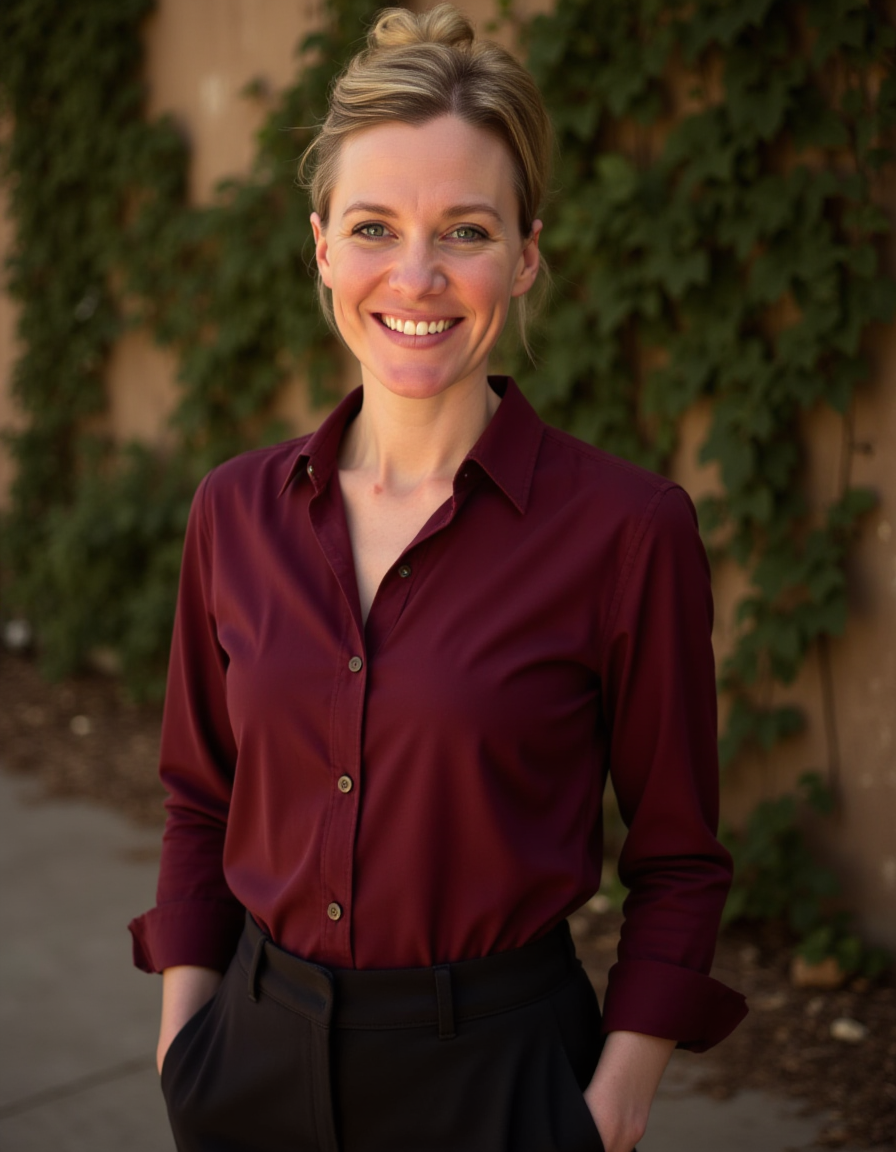
Allyson Clemmons, LCSW, LICSW
About ALlysoN & Executive Intensives
Why founders don't get what they need from regular therapy
I’m Allyson Clemmons, a licensed therapist who specializes in business betrayal, and a business owner myself. I run two businesses and consult for other private practice owners, so I understand from the inside what it costs to build a business.
What betrayal does to the person who built it, I know from 16 years of clinical work with betrayal in every form it takes.
I built Executive Intensives because of a pattern I kept seeing: after a betrayal, many founders consider therapy, but finding a therapist who understands what your business means to you and who doesn’t get weird about your income or your lifestyle or how much you care about the work, is much harder than it should be.
Even the entrepreneurs who do find a therapist often end up editing themselves in the room: downplaying how much the business matters, mentioning the financial impact but rounding it down, leaving out the part about how they haven’t launched in six months, because the therapist doesn’t get why all of that matters.
The real problem never fully makes it into the therapy conversation. Coaching gives them better systems for vetting contractors, and mindset work gives them reframes, but the problem was never a lack of systems or the wrong mindset.
So, 6-12 months later, they still can’t partner, still can’t share their work without worrying someone will steal it, and still can’t onboard a new team member without re-checking that person’s work so thoroughly that it would have been faster to just do it themselves.
When a client tells me they’ve stopped launching because they can’t stomach the idea of putting their work out there again, I understand what that’s costing them: the revenue, and also the business they built because they loved it, the work they were genuinely good at, the reason they went out on their own in the first place.
Alongside my clinical work, I’ve interviewed business owners around the world about their betrayals by partners, mentors, and employees they treated like family.
Those interviews shaped the content on this site, and they confirmed what I see in sessions: the money is rarely the deepest damage.

I’ve spent my entire career working with The impact of betrayal
What I’ve learned over 16 years as a therapist is that betrayal plays out the same way regardless of the relationship. When someone you depended on violates your trust, your brain recategorizes trust itself as dangerous:
A teenager whose parent was the source of both their safety and their harm becomes an adult who can’t let anyone close enough to hurt them.
Someone whose spouse had an affair becomes a person who monitors, controls, and interrogates, because they can’t afford to be caught off guard again.
And a business owner whose partner stole from them starts to distrust the very qualities that made them successful: their openness, their generosity, their willingness to trust people and share their work freely. Those feel like liabilities now, so they micromanage, withhold, and turn down opportunities they used to chase, because their brain has decided that leading the way they used to lead is what got them hurt.
What concerns me most about unresolved business betrayal is who owners become after it happens to them:
They stop sharing their knowledge freely, because the last time they were generous, someone took from them.
They micromanage every new hire, because they can’t tolerate giving anyone unsupervised access.
They lose the openness and warmth that made people want to work with them in the first place, and none of that was a conscious choice; their brain decided that being guarded was the only safe way to keep operating.
These are kind, ethical people who wouldn’t lead from suspicion if someone hadn’t betrayed them first.

Why Accelerated Resolution Therapy for Business Betrayal?
I use Accelerated Resolution Therapy because it resolves the root of the problem in hours rather than months, and because the way it works continues to fascinate me, even after 16 years of clinical practice. The speed of it, the precision of it, the way clients arrive at their own answers without me telling them what to think, never stops being remarkable to me. After all this time, ART is still what makes me excited to sit down for a session.
ART works because it targets how an experience is stored in the brain, not the verbal story of what happened.
For business owners, the practical advantages are efficiency and privacy: a single intensive session rather than months of weekly appointments, and a process that doesn’t require you to disclose what happened, which matters if you’re under an NDA or in active litigation.
If you want to see how I think about business betrayal, I write about it regularly in my articles on business betrayal.
Credentials & Training
Practicing psychotherapy since 2010
Specialized training in Accelerated Resolution Therapy (Basic and Advanced levels)
Licensed Independent Clinical Social Worker in Washington and Massachusetts
Licensed Clinical Social Worker in Oregon
Telehealth registration in Florida
California license coming soon!
Portfolio entrepreneur, business consultant to therapists

two ways to get started in Therapy
Option 1: Schedule Your Full Intensive
$5,000 flat-fee
Includes your assessment, one intensive session (3-5 hours), and all follow-up care at 30 days.
A 50% deposit is required to reserve your spot. You’ll receive informed consent documents via email to review and digitally sign within 24 hours of receiving your deposit. The remaining 50% will be charged within 24 hours prior to your scheduled session.
→ Schedule Your Intensive Here
Option 2: Introduction Session First
$500
A 60-minute conversation where we assess whether the intensive is the right fit for your situation. I’ll ask about what happened, how it’s showing up in your business now, and what you’ve already tried.
You’ll leave with a clear recommendation on whether the intensive will address what you’re dealing with, or whether something else would serve you better. No treatment happens in this session. If you book the intensive within 14 days, the $500 is credited toward your total.

Contact
Contact
For questions, please complete the form below and I’ll be in touch within 2 business days.